Academic research, professional engineering, and independent work predate the current institution.
LAB THROUGH TIME
How did Boundary First Labs get here?
A selective history of the experiments, software practice, independent research, and institution-building that eventually became Boundary First Labs.
This public view contains five reviewed turning points from the Lab's canonical timeline. They show continuity across the work without pretending to be a complete biography or a complete history of every project.
TIMELINE SOURCE DETAILS5 reviewed turning points in this public viewInspect source and review status
- LAB REVISION
- b54314584545
- SOURCE STATUS
- active_seed
- WEB VIEW STATUS
- reviewed_manual_projection
The Timeline Register preserves reviewed institutional history and durable event identity. Being included means an event matters to the Lab's history; it does not prove causation, scientific correctness, product success, or future fulfillment.
RECENT CHANGESWhat Changed
What materially changed recently?
A curated record of meaningful changes, rather than every commit, task, or idea.CURRENT PRIORITIESNowWhat deserves attention now?
The Lab's current priorities, what they depend on, and what would count as real progress.LAB HISTORYLab Through TimeHow did the Lab get here?
Selected historical and institutional milestones that explain how the current Lab developed.Search, comparison, coding, synthesis, and cross-referencing become fast enough to operate at corpus scale.
AI and automation make it practical to search, compare, test, document, and maintain more of the Lab's work without pretending that software is a staff.
A milestone appears here only after the Lab has reviewed it as part of its durable institutional history. Inclusion records that the event matters to the history; it does not prove that the event caused later work, validate a scientific claim, or establish product success or outside recognition.
FIVE TURNING POINTS
How the Lab took shape.
Provenance2006–2007
Early physics experiment: why a soccer ball curves
An early research project turned curiosity about a curving soccer ball into a concrete Magnus-effect experiment.
See before / afterMethod2014
Software design becomes process-first
Documented software-design work began treating workflow and system representation as things to design explicitly, not just implementation details.
See before / afterMethodApr–May 2018
Agile becomes an explicit delivery method
Software consulting and delivery experience developed into a more deliberate method for sequencing work, feedback, inspection, and completion.
See before / afterInstitution2019–2021
Independent research grows into a room-scale workbench
By roughly 2019–2021, independent research had a dedicated physical environment of notes, books, whiteboards, diagrams, and active research surfaces.
See before / afterInstitution2026
Boundary First Labs becomes an explicit institution
In 2026, accumulated research, software, experiments, methods, and product work were organized under Boundary First Labs as a public institution.
See before / afterRESEARCH ROOM SURVEY · C. 2019–2021
The research had a room before it had a Lab.
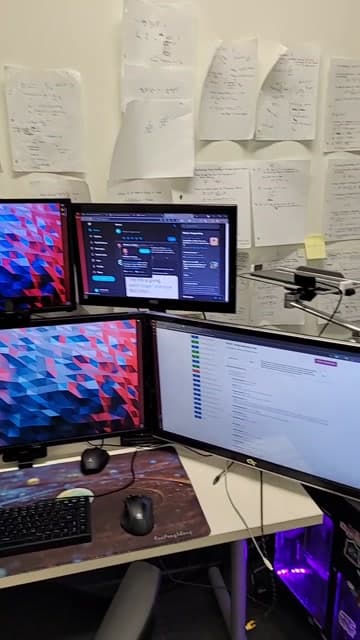
Five stills from the preserved survey video show the physical scale and organization of the independent research period that preceded the current AI-accelerated institution.
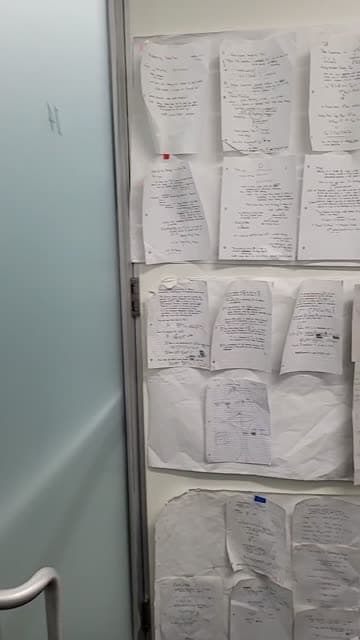
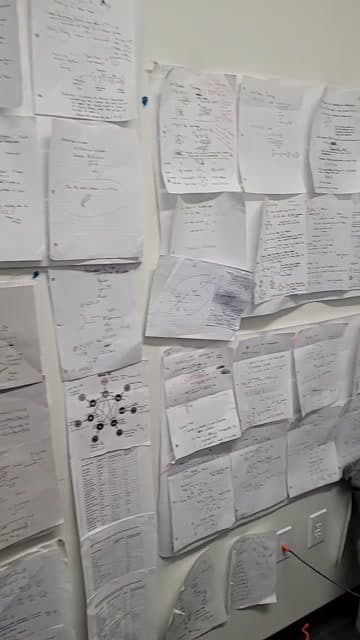
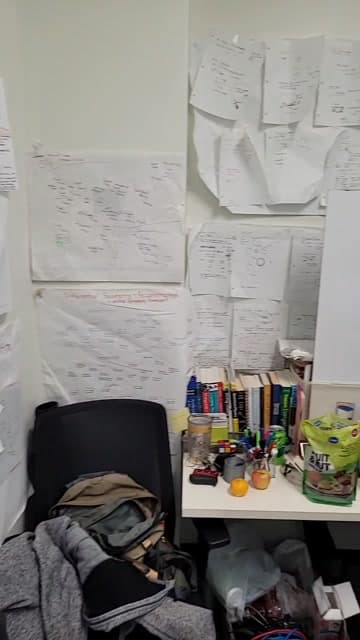
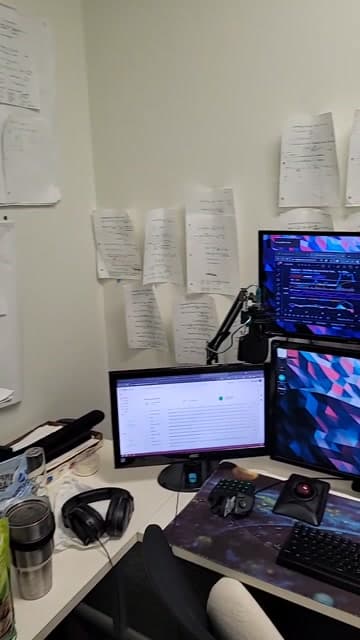
EXPANDED PHYSICAL STATEc. 2019–2021
Five stills from the preserved room-survey video, shown together as a spatial record.
PHYSICAL RESEARCH ENVIRONMENT
c. 2019–2021Research-room survey
By this period, the work had expanded into a room-scale environment of notes, books, whiteboards, diagrams, and active research surfaces.
WHAT THE IMAGES ESTABLISH
A substantial room-scale independent research environment existed before the current AI-accelerated Lab. They establish scale, organization, and chronology—not correctness, priority, or maturity of every claim visible in the room.
WHAT AI CHANGED
AI changed the speed and scale of the work, not where it came from.
The chronology is the point. The room-scale research period and much of the underlying corpus predate the current AI-accelerated Lab. Commercial AI changed the cost of searching, comparing, coding, and reorganizing that material; it did not supply the starting point.
Formal training and undergraduate research supplied computational models, research practice, and repeated contact with evidence.
Production systems made incomplete requirements, hidden state, ownership, failure, and repair practical engineering problems rather than abstract ideas.
Language models made comparison, translation, drafting, coding, and orchestration cheap enough to become routine laboratory operations.
WHY THIS MATTERS TO THE CURRENT LABWhat changed was leverage, not authorship.Expand the distinction
The sequence matters: training and engineering practice supplied judgment; independent research supplied the material; AI and automation lowered the cost of transforming, comparing, and coordinating it.
That leverage helps explain the Lab's scale. It does not validate the research. Claims still have to survive evidence, comparison, criticism, and explicit human promotion.
THREE TIME SCALES
Recent changes. Current priorities. Long-term history.
What Changed records the latest material changes. Now shows what the Lab is prioritizing and what would count as progress. Lab Through Time preserves the longer history that explains how the current institution developed.